Showing posts with label Review Santa Fe. Show all posts

Monday, January 24, 2011

2011 CENTER AWARDS: Last Call for Entries

Corridors of Power / New School, New York
CENTER 2010 Project Launch Award, Honorable Mention
Photograph (c) Luca Zanier

Deadline for Review Santa Fe, Project Competition, Project Launch and The Choice Awards is January 27, 2011 VisitCenter.org

Wednesday, May 12, 2010

MANJARI SHARMA: Show & Tell

from The Shower Series
Photograph (c) Manjari Sharma/All Rights Reserved

from The Shower Series
Photograph (c) Manjari Sharma/All Rights Reserved

from The Shower Series
Photograph (c) Manjari Sharma/All Rights Reserved


from The Shower Series
Photograph (c) Manjari Sharma/All Rights Reserved

from The Water Series
Photograph (c) Manjari Sharma/All Rights Reserved

"For the last few months I have been inviting people to visit my apartment and allow me to photograph them in a very intimate space; my bathroom. I have also been inviting them to take a shower as I continue to shoot them. I soon came to the observation that warm water running over my subjects bodies often relieved them of any unnerving awkwardness the camera brought about. Once they were relaxed, the bathroom, formerly a beauty parlour, now became a confessional and I the hair dresser. Many of my subjects shared intimate details of their life with me and every new person in the shower became a brand new allegory."

+ + +

I was first introduced to Manjari Sharma by Mary Virginia Swanson, at MVS's inspiring lecture at ASMP/NY last fall. I loved Manjari's "Shower Series" and also the Portfolio, Water and India series on her website. Sharma moved to the U.S. from India in 2001 to attend the Columbus College of Art and Design in Ohio, then moved back to India to travel and photograph. She then moved to NYC in 2007, where she's been shooting for AOL, Penguin Books, and others, as well as exhibiting her personal work. Manjari has been selected to present her portfolio for the prestigious Review Santa Fe 2010.

+ + +

May 18:
Show & Tell: Photographers Salon. Manjari Sharma will present "The Shower Series". Dot Editions, 119 8th St, Park Slope Brooklyn 6-9 pm.

May 21-23: San Francisco Fine Art Fair, Richard Levy Gallery, booth #11/12

June 4: Review Santa Fe Portfolio Viewing. An evening open to the public for free to view the work of all 100 photographers selected for Review Santa Fe.

Thursday, April 15, 2010

BRYAN MELTZ: Rural Haiti March 2010

Los Palis, Haiti. March 26, 2010
Photograph © Bryan Meltz
/ All rights reserved


A 2 year old is brought into the Los Palis Health Clinic by her grandmother for severe malnutrition. The girl's parents abandoned their daughter and the grandmother is too poor to provide for the child. Photograph © Bryan Meltz/ All rights reserved

Outside Port au Prince, Haiti
Photograph © Bryan Meltz
/ All rights reserved

Los Palmas, Haiti
Photograph © Bryan Meltz
/ All rights reserved

"This is the first series of a new project documenting the ongoing public health crisis following the Jan. 12 earthquake in Haiti that killed more than 230,000 people, left 1 million homeless, and sent 600,000 to the rural countryside.

On March 20, 2010, I traveled to Central Haiti with a group of doctors and medical professionals from the Haiti Humanitarian Fund who have been working in the region for over a decade, and documented the challenges facing this vast and chronically poor region where centuries of deforestation have left only 2 percent of it's original cover, making it almost impossible for farmers to grow enough food to feed their families.

In May I will be working with Dr. Bob Paeglow in Port au Prince and in June with Dr. Alewe Oladele of The Andrew Young GIANT Global Initiative in Grand Goave."–
Photographer Bryan Meltz

Sunday, January 3, 2010

HIROSHI WATANABE: photo-eye Editions

Aikichi 2, Suo Sarumawashi
Toned Gelatin-Silver Print, Edition of 30
Copyright (c) 2008 Hiroshi Watanabe /All Rights Reserved


Fukunosuke, Suo Sarumawashi
Toned Gelatin-Silver Print, Edition of 30
Copyright (c) 2008 Hiroshi Watanabe /All Rights Reserved

Limited Edition Black Anodized Aluminum Box
Portfolio Copyright (c) photo-eye Editions /All Rights Reserved


Fukunosuke's Hands, One of 12 prints chosen for the Edition
Portfolio Copyright (c) photo-eye Editions /All Rights Reserved


Sunday, November 22, 2009

ERIC MILES: Photography Book Collecting

Cindy Sherman, 1987 Whitney Museum catalogue

Robert Frank: The Americans (1st American edition)

ERIC MILES is Director of photo-eye Auctions. He is a specialist in rare photo books and contemporary photography and a contributor to Foam magazine, American Photo, and photo-eye Booklist. He holds a Master's in art history from Hunter College and completed additional graduate work at City University of New York Graduate Center. In 1990-1991, he was a participant in the Whitney Museum Independent Study Program. He has taught art history and criticism at Hunter College, Fashion Institute of Technology, and Pratt Institute as well as been a reviewer and presenter at the Santa Fe Workshops, Review Santa Fe and PhotoLA.

I recently asked Eric Miles a few questions about the art of rare photography book collecting:

Can you give a brief history of your work with photo-eye Auctions, beginning in Santa Fe and expanding to NYC?

EM: I started working with photo-eye in January of 2004, just a few months after the auctions launched. Initially, I was hired to do cataloging. As with many positions at photo-eye, job descriptions have a way of rapidly expanding to include many other tasks. Thankfully, in my case, most of these had to do with administering the auctions: cataloging, scanning, and working with consignors. Within about six months, they had become more or less my exclusive domain. For this reason, the move to NY in the fall of 2007 was pretty much seamless. Being in NY, I obviously get out more and am able to secure more and better consignments.

What is the criteria for the books that make it into your Auction? Are they all 1st editions and must be signed by the author (photographer)?

EM: I try to be fairly selective about what makes it into the auctions. I am always looking for fresh material. Books do not have to be signed, but for the most part, they do need to be out of print; otherwise, I am competing with booksellers offering new books, which is not what the auctions are set up to do. Occasionally I will take books that are still in print IF they are signed. The main criteria are rarity and condition. The two are related in that some books are really pretty common in just o.k. condition, but in perfect condition they are very rare. The older the book, the greater the extent to which this holds true. Likewise with signatures: some artists just don't sign very many books–Cindy Sherman is a good example; many Europeans and Japanese who don't make it to the States that often as well. Finally, I am always looking for material that just isn't easily found on the used book sites. Also, books with interesting inscriptions that tell some sort of story; for instance, I have a copy of a wonderful book by Hiroshi Hamaya called Ura Nihon (Japans Back Coast) that is inscribed by him to "Mama San Capa". Hamaya was the first Asian member of Magnum; this inscription to Robert & Cornell Capa's mother is a wonderful memorial to Capa and a fascinating bit of history documenting a relationship between the two photographers. Also, supplemental material can also be of interest to collectors. For example, I have a copy of Diane Arbus' first monograph, which contains the image 'Two Girls in Identical Raincoats.' Along with the book, I have the card that Aperture sent out to its subscribers offering the book for sale.

Diane Arbus: An Aperture Monograph
Rare 1st Edition with 'Two Girls In Identical Raincoats'

Josef Sudek: Fotografie (Signed in 1959)

Scarce Hiroshi Hamaya Monograph

Are Vintage photography books more collectible than Contemporary photography books?

EM: Sometimes. Again, much has to do with condition and completeness; for example, some books from the period between the two world wars are quite common. However, dust jackets from the period are often missing. With the incredibly high volume of new titles published each year, buying new books for their collectibility can be a crap shoot. That said, if a) the book is by an artist with a well-established reputation, and, b) the edition is small (500-1000 or less), it is pretty hard to go wrong. J.H. Engstrom's books are a good example.

Are there any rare copies you regret having to sell?

EM: This one: Milano by Giulia Pirelli and Carlo Orsi. It comes up so rarely for sale.

What has been the finest rare book collection you've ever seen?

EM: Without a doubt the collection belonging to Manfred Heiting. He was a marketing executive and designer for Polaroid in the 60s and 70s. He sold off a collection of prints about 7-8 years ago in order to focus on books. He is a fanatical completist–he must have every dust jacket, every belly band, every publisher's insert, etc....He is building a database that includes all such information, much of which got lost back in the day when libraries would simply discard dust jackets and anything else they thought would deteriorate or just get in the way.

Most interesting book in the past that you've sold?

EM: Again, there are so many: Moriyama: Bye Bye Photography; a first edition of Willy Ronis: Belleville Ménilmontan with a rare variant cover; a couple of Mao propaganda books that rarely show up in the west; a rare Japanese quarterly called Ken that was put out by Shomei Tomatsu; finally, an incredibly haunting Czech book called Toto mesto je vespolecne peci obyvatel. (This Town is Under the Control of its Citizens) with surreal photographs by Miroslav Peterka that look something like an Atget on bad acid!

Would you reveal the most expensive book PEA has sold in the past (and why)?

EM: We've sold many, many books in the $1000-2000 range. We've also sold many in the $3000-4000 range. As for most expensive, a Willy Ronis portfolio of collotypes (not a book, strictly speaking) sold for over $6000 back in '07; a limited edition of Sonia Bulaty's Josef Sudek bio for over $5000; a suite of Sally Mann nudes (prints, though, not a book) for over $9000; a reasonably nice copy of Robert Frank's The Americans in it's first American edition for $4500. It being an auction situation, sometimes enthusiastic bidding can push the price of a lot up way above its market value. Anytime one bids in an auction, due diligence is the name of the game!

What are a few of the finest rare books you were not able to acquire?

EM: Again, too many to mention: the three issues of Provoke magazine come to mind. They were a short-lived but very influential Japanese collective of whichDaido Moriyama was the best known member. Another would be the first edition of Moi Ver's Paris

Are you personally a fine art book collector?

EM: Yes, I have a small collection, but I've got some pretty severe space restrictions!

PHOTO-EYE AUCTIONS
Rare and Collectible Photography Books

Friday, November 20, 2009

Thursday, November 12, 2009

MARY VIRGINIA SWANSON: Fine Art Photography Guru

Mary Virginia Swanson, Marketing Consultant,
MV Swanson and Associates
Photograph
(c) ACP

Mary Virginia Swanson overseeing Review Santa Fe's 2009
Public Portfolio Viewing
at CCA/Center For Contemporary Arts

Photographer Debbie Fleming Caffery with MVS at CCA
Center For Contemporary Arts
Public Portfolio Viewing

MARY VIRGINIA SWANSON is committed to helping photographers advance their careers by providing insights into the most effective ways to introduce their work to gallery and museum professionals.

After receiving an MFA in Photography from Arizona State University (ASU) in 1979, she served as workshop coordinator for The Friends of Photography, an organization founded by Ansel Adams, Beaumont Newhall and other key figures. Swanson headed the expansion and management of its educational programming, including the famed Ansel Adams Workshops, bringing hundreds of eminent photographers to teach in the programs at FOP
.

In 1984, Swanson relocated to New York City to direct Special Projects for Magnum Photos, the landmark photojournalism Cooperative founded by Henri-Cartier Bresson, Robert Capa, David “Chim” Seymour and George Rodger at the end of World War II. It was during her tenure at Magnum that Swanson became aware of the increasing market for image licensing rights and reproduction. In 1991, Swanson launched SWANSTOCK, a landmark alternative agency, managing licensing rights for fine art photographers. Well, you need to read her impressive bio for all the rest!

Swanson currently works with photographers as a marketing consultant and is a sought-after portfolio reviewer at events such as Review Santa Fe, Fotofest and PhotoLucida. Her workshops and lectures on the subject of marketing opportunities and awareness have aided photographers in moving their careers to the next level. Swanson maintains a popular blog, Marketing Photos, and is the author of a self-published book, The Business of Photography: Principles and Practices.

If you are in NYC Monday November 16th, do not miss MVS's lecture hosted by the American Society of Media Photographers, info below. And check her website for upcoming lectures in a city near you.


+ + +

MVS Talk 11.16.2009
PRESENTING YOUR WORK TO THE FINE ART COMMUNITY
Studio 385 • 385 Broadway (White x Walker) • NYC ($20. / Students $5.) Register HERE

During this presentation, Mary Virginia Swanson will provide insights into the most efficient and effective avenues for introducing your work to industry professionals towards presenting your work in the collectible fine art market. She will discuss the strategies surrounding submitting work to national and international juried exhibitions and portfolio review events such as FotoFest, Photolucida and European festivals. Art fairs such as AIPAD and Photo LA will be discussed from the standpoint of assessing market trends and helping artists determine which dealers will be most appropriate for their work. Swanson will also cover the professional practices necessary to effectively present your photographs in the market, as well as sharing examples of effective self-promotion materials in print and on-line formats. Handouts with related information will be shared with participants.

Saturday, November 7, 2009

WILLIAM R WILSON: Auto Immune Response


CLICK ON IMAGES TO ENLARGE!


Auto Immune Response
Photograph (c) William R Wilson /All Rights Reserved

Auto Immune Response #2
Photograph (c) William R Wilson /All Rights Reserved

Auto Immune Response #4
Photograph (c) William R Wilson /All Rights Reserved

Auto Immune Response #5
Photograph (c) William R Wilson /All Rights Reserved

Auto Immune Response #6
Photograph (c) William R Wilson /All Rights Reserved

Auto Immune Response #10
Photograph (c) William R Wilson /All Rights Reserved

"Throughout my work I have focused on photographing Navajo People and our relationship to the land. While portraying this relationship I have always been aware of how our representation has never been without consequence."

The Museum of Contemporary Native Arts, Santa Fe, N.M., announced William R Wilson (Navajo) has been selected to oversee the Vision Project, a Ford Foundation grant initiative. Wilson's first undertaking will be to oversee the history of the Contemporary Native American Art Movement in a book featuring Native artists from the U.S. 15 scholars will write up to four essays each on living artists who have made considerable contributions who vary in age and media.

+ + +

WILLIAM WILSON, Dine’ (Navajo), born in San Francisco, CA, moved permanently to the Navajo Reservation when he was 10. He earned a MFA in Photography, with a focus on the History of Photography, at the University of New Mexico and a BA in art history and studio art from Oberlin College, OH.

In Wilson's Auto-Immune Response Series (above), he set out to photograph the Navajo people in relationship to the land, including figures to represent his people and himself. In the photographs, a luminal figure or pair of figures wearing gas masks appear in different dramatic natural places; in the area of the Grand Canyon and in upstate New York near the Finger Lakes. This post-apocalyptic man survey’s what appears to be a pristine and expansive landscape and wonders what has gone wrong. For the Auto-Immune Response Series Wilson received the prestigious Eiteljorg Fellowship for Native American Fine Art. The Series was a solo exhibition at the National Museum of the American Indian, Smithsonian Institute, New York, NY and the Heard Museum, Phoenix, AZ. His work is in the Collections of the National Museum of the American Indian, Smithsonian Institute, Washington D.C., the Heard Museum, Phoenix, AZ, the University of New Mexico Art Museum, Albuquerque, NM, the Juane Quick To See Smith Private Collection, Corrales, NM among others.

Wilson, an artist, photographer, and arts educator, has taught sculpture at the Institute of American Indian Arts in Santa Fe, N.M., photography at Oberlin College and the University of Arizona and served two years as a photojournalist in Central America for the Associated Press. From 2000-2005, Wilson was the co-director of the Barrio Anita Community Mural Project, the largest public art commission in Tucson, Arizona's history. BAMP features a 12,000-square-foot mural alongside the Interstate 10 sound barrier wall. The project involved the creation of a multi-media Arts Center for the community. The Arts Center features digital photography, Venetian glass tile photo-mosaic, metal work and more.
View the BAMP Murals:
North Contzen Street Mural and Ouray Park Mural
Will Wilson Creates Indianapolis Mural video


William R Wilson Website

Wednesday, October 21, 2009

ERIKA DIETTES: Drifting Away


Clothing of the Disappeared
Photographs (c) Erika Diettes
/All Rights Reserved


"The rivers of Colombia are the world´s largest graveyard."

In DRIFTING AWAY my intention is to draw attention to the victims of forced disappearances of the Colombian armed conflict. The project is a response to a number of press reports and news broadcasts which explain how the paramilitaries and the guerrillas torture people, mutilate them and make them disappear by throwing their bodies into a river. This is the source of the saying "the rivers of Colombia are the world´s largest graveyard".

To create an expression of this horrible situation, I decided to submerge pieces of clothing or personal objects of the victims in turbulent water, and then photograph them. I print these photographs on glass to convey the feeling of the ethereal and fragile character of life in those parts of our country.

These very large glass photographs are then displayed upright in the ground, like translucent tombstones in a cemetery. This way people can walk in and around them, and begin to experience the grief of loss. It has been very difficult for the families of the disappeared to feel the healing power of grief, especially since there is often no certainty whether one of the disappeared is actually dead or alive.

I started in Bogotá by looking for clothing or objects belonging to people who had disappeared. Then I continued my search in other areas of conflict, including Eastern Antioquia, Caquetá and Medellín, amongst other places.

During these macabre visits I was able to talk to the families of the victims, who are indeed the voice of all Colombia, clamouring not only for the respect for life, but also for the right to be able to bury their dead. — Erika Diettes

+ + +

I first met Colombian photographer Erika Diettes several years ago when she was exhibiting her very moving project SILENCIOS. Silencios was an ambitious project Erika compiled of portraits and testimonials of the Jewish population in Colombia that had survived the concentration camps of Nazi Germany during World War II. Please read more and view photographs of Erika's human rights projects on her website. Erika Diettes Website

Oct 22-25, 2009 • Exhibition: Drifting Away
Newark Arts Council Building • 744 Broad St • 6th floor • Newark NJ 07102
View Gallery Installation

Thursday, October 15, 2009

EWA ZEBROWSKI: Another Place

Vedute di Venezia Project
Copyright (c) Ewa Zabrowski
/All Rights Reserved


The Girl In The Landscape Project
Copyright (c) Ewa Zabrowski
/All Rights Reserved


The Girl In The Landscape Project
Copyright (c) Ewa Zabrowski
/All Rights Reserved


In the last few years writers like Robert Frost, Anne Michaels, Joseph Brodsky, and Mark Strand have influenced my way of looking and have brought me inspiration. Reading continually nurtures my artistic practice.

"EWA ZEBROWSKI's thoughtful photographs are like her elegant books - each one is a refined world within itself. Her work imparts in us a quiet and ineffable desire. We wish to be within the world she photographs."– Sam Abell

Books by Ewa Zebronski
Ewa Monika Zebrowski Website

Sunday, August 30, 2009

JEFFREY AARONSON: Borderland

Saguaro Cactus, AIO Highway, Arizona, 2007
(c) Jeffrey Aaronson/All rights reserved

Border Patrol, All Terrain Vehicles, Laredo, Texas, 2008
(c) Jeffrey Aaronson/All rights reserved

Sister Maria, Palomas, Arizona, 2007
(c) Jeffrey Aaronson/All rights reserved


The border between the United States and Mexico is a construct beginning at the Pacific, snaking through the southwest desert and ending in the Gulf of Mexico. The borderland, the zone existing near the frontier, is an area of messy vitality by virtue of the collision of cultures living within it's boundaries. To live in the borderland is to live at the end of the country, the last place before another place starts.

JEFFREY AARONSON was born in Hollywood, California and lives and works in Santa Barbara. He traveled the border of the United States and Mexico, "a region of low-rise towns and deserts dotted with saguaro cacti and aluminum trailers", in search of cultural phenomena. Aaronson's work has been exhibited at Galerie Kashya Hildebrand, Zurich and N.Y., Photo Miami, Houston Center for Photographys 27th Anniversary Members Exhibition (Juror´s Commendation from Katharine Ware), David Floria Gallery, Aspen, Colorado and Scope Basel. He was a 2009 Critical Mass Finalist, nominated for the 2009 Santa Fe Prize 2009, won the 2002 Graphis Award from American Photography, among several others. Jeffrey was one of 100 photographers invited to participate in Review Santa Fe 2009. Please click on images to see the photographs enlarged.

Jeffrey Aaronson Website
Galerie Kashya Hildebrand, Zurich

Monday, July 27, 2009

MARVI LACAR: Maasai Women Project

Kahlo House, Mexico © Marvi Lacar / All rights reserved

Hudson Bay, Ivujivik, Canada, 2008 © Marvi Lacar / All rights reserved

Takaya, Escaped From FGM. The Tasaru Ntomomok Safehouse for Girls, Kenya. Photograph © Marvi Lacar / All rights reserved

Mary Silio. The Tasaru Ntomomok Safehouse for Girls, Kenya
Photograph © Marvi Lacar / All rights reserved

MARVI LACAR came to the U.S. at age 15 from the Philippines. After receiving a bachelor's degree in Michigan from a liberal arts college, Lacar worked for several non-profit organizations before pursuing her master's degree in Journalism at the University of Texas in Austin. She completed a visual journalism fellowship at the Poynter Institute and interned at the Philadelphia Inquirer before moving to NYC in 2004.

Lacar was the 2008 winner of the Levallois - Epson Photography Award for her Journey Through Avignon. For her work documenting the progress of Maasai girls, women and men who are fighting against Female Genital Mutilation she won the 2008 Jurors Choice, Project Competition from the Santa Fe Center for Photography. She has been a nominee for the Joop Swart Masterclass and recognized by Communication Arts, PDN, and American Photography. Her clients include The New York Times, Time, Newsweek, Paris Match and Stern Magazines among many others.
Project: Healing the Deepest Scars: Rescue and Rehabilitation of Maasai Girls Escaping Circumcision and Early Marriage

Lacar lives in NYC with her husband, photojournalist Benjamin Lowy.
Website: http://www.marvi.net
PhotoBetty Post

Monday, July 6, 2009

JULIE BLACKMON: Domestic Vacations

Rooster, 2007 © Julie Blackmon / All rights reserved

Powerade, 2005 © Julie Blackmon / All rights reserved

PC, 2005 © Julie Blackmon / All rights reserved
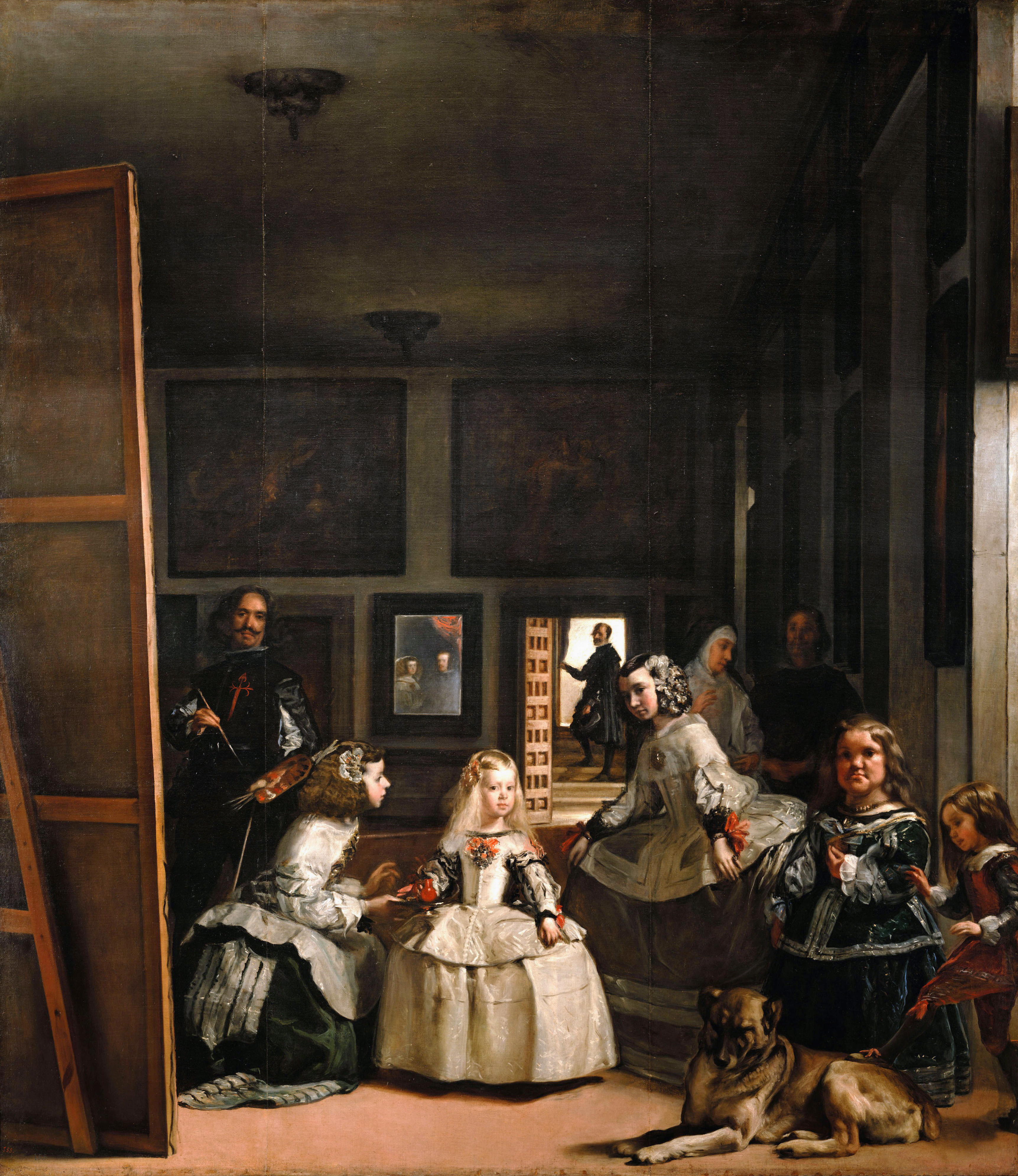
Inspired by the Velásquez painting Las Meninas

Front Porch, 2005 © Julie Blackmon / All rights reserved

The Dissolute Household painting by Jan Steen

The Dutch proverb "a Jan Steen household" originated in the 17th century and is used today to refer to a home in disarray, full of rowdy children and boisterous family gatherings.
+ + +

JULIE BLACKMON is the oldest of nine children and now the mother of three. Her photographs have been honored with numerous awards since she began exhibiting, including American Photo Emerging Artists 2008, first prize from CENTER/Santa Fe Center for Photography Project Competition, and PDN's 30, among others.

DOMESTIC VACATIONS: "The paintings of Steen, along with those of other Dutch and Flemish genre painters, helped inspire this body of work. As Steen’s personal narratives of family life depicted nearly 400 yrs. ago, the conflation of art and life is an area I have explored in photographing the everyday life of my family and the lives of my sisters and their families at home. These images are both fictional and auto-biographical, and reflect not only our lives today and as children growing up in a large family, but also move beyond the documentary to explore the fantastic elements of our everyday lives, both imagined and real.

The stress, the chaos, and the need to simultaneously escape and connect are issues that I investigate in this body of work. We live in a culture where we are both "child centered" and "self-obsessed." The struggle between living in the moment versus escaping to another reality is intense since these two opposites strive to dominate. Caught in the swirl of soccer practices, play dates, work, and trying to find our way in our "make-over" culture, we must still create the space to find ourselves. The expectations of family life have never been more at odds with each other. These issues, as well as the relationship between the domestic landscape of the past and present, are issues I have explored in these photographs. I believe there are moments that can be found throughout any given day that bring sanctuary. It is in finding these moments amidst the stress of the everyday that my life as a mother parallels my work as an artist, and where the dynamics of family life throughout time seem remarkably unchanged. As an artist and as a mother, I believe life’s most poignant moments come from the ability to fuse fantasy and reality: to see the mythic amidst the chaos." — Julie Blackmon

Julie Blackmon 2009 New Work
Radius Books "Domestic Vacations"